
To address this, the GiroZero project—“Steering the Road Freight Transport towards Zero Emission”—funded by UK PACT and led by Universidad de los Andes School of Management, the School of Engineering, and Cardiff University, presented its second-year results. The project promotes the adoption of low- and zero-emission technologies and improved environmental practices in freight transport.
In its second year, GiroZero carried out eight cross-cutting activities, consolidating tools and simulators for decision-making at macro (public sector) and micro (private sector) levels. It also advanced knowledge generation to ensure a gradual transition toward zero emissions through early decisions.
What was the strategy?
The interdisciplinary team analyzed the market for new technologies, conducted pilots comparing different technologies, supported public policy creation to accelerate technological adoption, and organized seminars, visits, and training sessions to build capacity.
Additionally, the team launched the GiroZero Toolbox and published the GiroZero Roadmap, along with two policy briefs offering recommendations for COP challenges and Colombia’s National Development Plan 2022–2026. These proposals include incentives for zero-emission technologies, eliminating fossil fuel subsidies, gradually increasing carbon taxes, improving fleet modernization programs, and creating zero-emission zones.
“Our work builds on Colombia’s decarbonization goals for the TAC sector. Collaboration with public and private actors has allowed us to create a shared vision supported by UK PACT. Our research and tools aim to demonstrate how TAC can transition to zero emissions while improving competitiveness and performance,”
said Gordon Wilmsmeier, Project Lead and Director of the Kühne Chair in Logistics at Universidad de los Andes School of Management.
“In the past two years, we’ve built strong collaboration with public and private sectors. Joint pilots and data analysis have been key to shaping a vision for the sector,”
added Juan Pablo Bocarejo, GiroZero team member and Professor at the School of Engineering.
The tools developed by GiroZero directly support strategic decisions for companies collaborating with the project. Feedback from these companies has been essential to achieving results, noted Wessam Abouarghoub, Reader in Logistics and Operations Management at Cardiff University.
Regarding fleet renewal, researcher Carlos Hernández explained:
“Our research seeks financial instruments to make these trucks more affordable for carriers and highlight the financial benefits of acquiring or leasing low- or zero-emission trucks.”
What’s next?
GiroZero aims to help companies analyze costs and benefits of changing fleet configurations, identify the best trucks for each route, and reduce emissions overall.
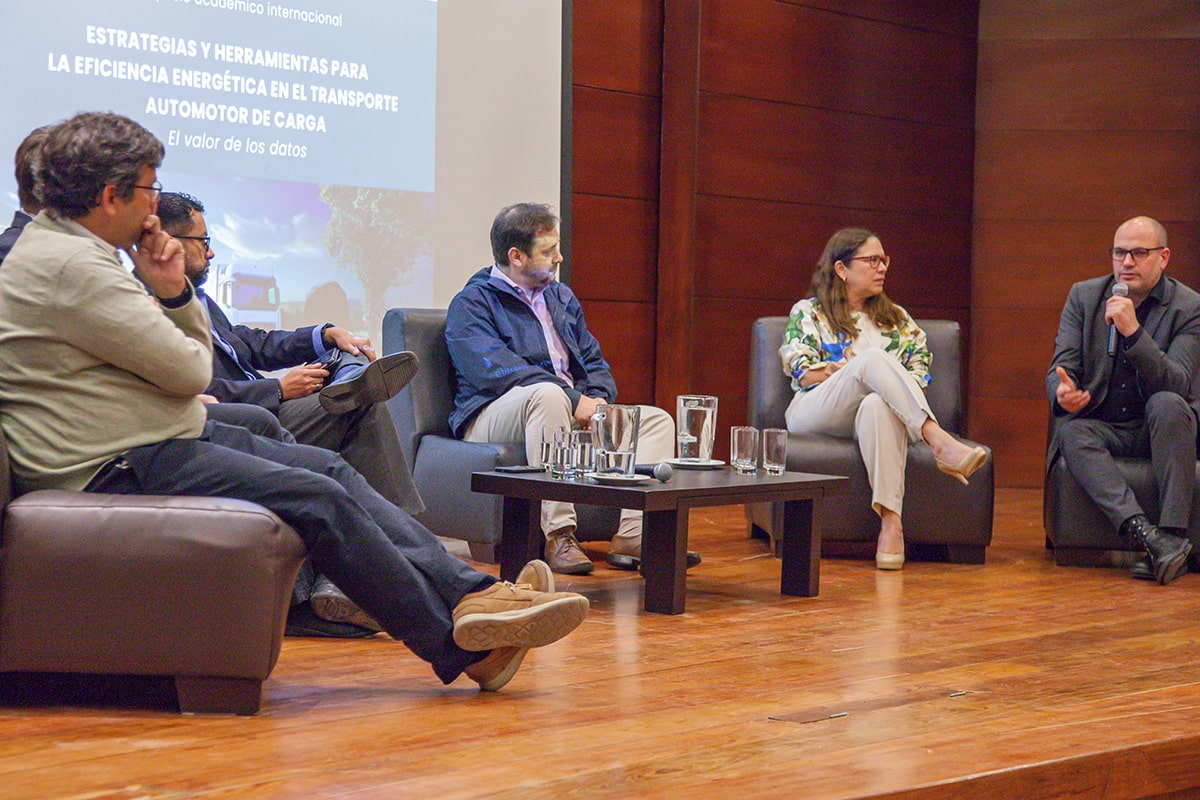
The second-year results presentation included representatives from public entities such as the National Planning Department, Ministry of Transport, and private organizations like ANDI, Colfecar, and Fenalco. Discussions focused on cultural change, coordination among stakeholders, and incentives for fleet modernization.
Although focused on Colombia, GiroZero is part of a broader network of initiatives in the Americas, collaborating with programs like SmartWay (USA) and GiroLimpio (Chile). In January 2023, six South American universities met in Bogotá to strengthen research on TAC decarbonization.
Short- and medium-term goals include creating collaborative networks to share cost-benefit information, improving private-sector data analytics capabilities, and serving as a permanent forum for dialogue among public, private, and academic actors.
For more information, visit https://girozero.uniandes.edu.co/.